
Symptoms of myeloma
 Fact-checked by
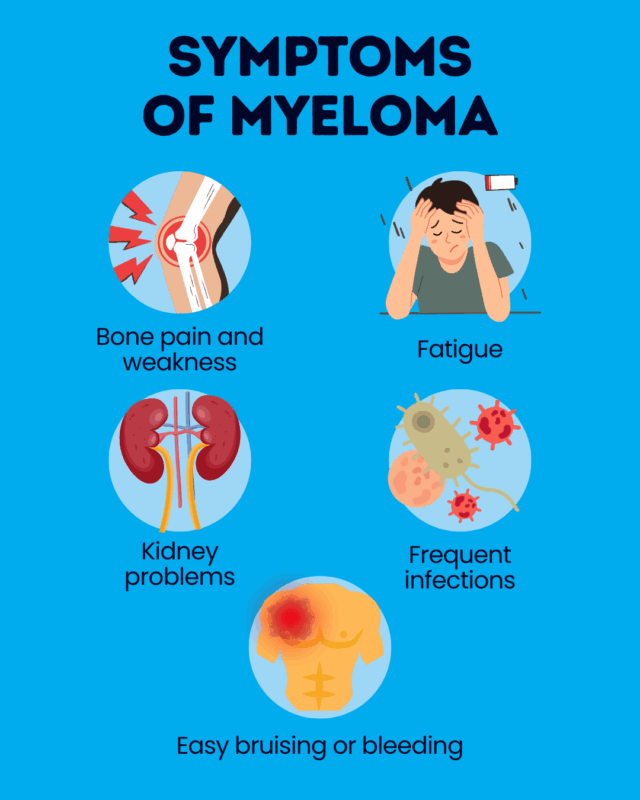
 The most common symptoms of myeloma include bone problems, fatigue, infections, easy bruising or bleeding, and kidney problems. These arise when cancerous cells and the abnormal proteins they produce damage and interfere with the usual function of various body systems and tissues.
Myeloma arises when antibody-producing immune cells called plasma cells become abnormal and grow out of control in the bone marrow — the spongy center of bones where blood cells are produced — crowding out healthy blood cells. These cancerous plasma cells, or myeloma cells, also produce an abnormal antibody called M protein that damages various tissues. Myeloma is often called multiple myeloma because the disease usually affects multiple areas in the body.
Myeloma symptoms can vary widely from person to person. Recognizing the possible signs of multiple myeloma and seeking prompt medical attention are key to ensuring an early diagnosis and treatment for this rare blood cancer.
Common symptoms of myeloma
Myeloma often does not cause any symptoms at first, which is one reason why reaching a myeloma diagnosis can be difficult in the earliest stages. As abnormal plasma cells continue to accumulate and M protein levels rise, symptoms may include:
- bone problems
- problems related to low blood cell counts
- kidney problems
Bone problems
Myeloma cells form masses that disrupt normal bone structures and lead to overactivity of other cells that break down bone, causing damage. As such, most people with multiple myeloma — up to around 80% — experience bone problems and related issues such as:
- bone pain
- weak bones (osteoporosis) and increased vulnerability to bone fractures
- elevated levels of calcium in the blood (hypercalcemia), due to the damaged bones releasing excess calcium into the bloodstream
Bone problems commonly affect the spine, pelvis, ribs, and skull. Bone pain is often felt in the back, chest, and hips, especially when moving around or at night. It may be mild or severe.
Low blood cell counts and related symptoms
As myeloma cells grow out of control in the bone marrow, they crowd out healthy blood cells, leading to a range of possible symptoms related to low blood cell counts. These include:
- Anemia: This is a lack of healthy red blood cells needed to carry oxygen through the body, which affects more than 60% of people at the time of diagnosis. Symptoms related to anemia may include weakness, fatigue, dizziness, or shortness of breath.
- Frequent infections: A lack of healthy white blood cells (immune cells) can lead to frequent or severe infections, with myeloma patients being about 15 times more susceptible to infection than people without it. Frequent infections can also contribute to fatigue.
- Impaired blood clotting: Low numbers of platelets, which help the blood clot after an injury, can mean that people with myeloma bleed or bruise more after even minor injuries.
Kidney problems
The kidneys, which are responsible for filtering waste from the blood, become overworked in myeloma due to the high levels of calcium and M protein in circulation. More than half of people with myeloma experience kidney impairment. This can progress to the point of kidney failure, where the organ is no longer capable of performing its usual functions.
Kidney issues may not have symptoms and are often first detected in blood tests, but possible signs that can emerge as kidney disease advances include:
- changes in urine output and urination frequency
- excessive thirst
- fatigue or shortness of breath
- swelling in the legs
- nausea or vomiting
- appetite changes
Other possible symptoms
Several other myeloma symptoms are also possible, including:
- hypercalcemia: This may cause symptoms of confusion, drowsiness, nausea or vomiting, constipation, abdominal pain, appetite loss, or excessive thirst and urination
- nerve damage (neuropathy): Weakness, numbness, tingling, or burning sensations in the hands and feet can occur when M protein damages nerves
- spinal cord compression: Weakened bones can collapse and press on nerves in the spinal cord, leading to sudden, severe back pain and numbness or weakness in the legs
- overly thick blood (hyperviscosity): Symptoms such as confusion, dizziness, weakness, and slurred speech can arise when large amounts of M protein thicken the blood and reduce blood flow to the brain
Symptom patterns and progression
Myeloma can manifest differently between patients, and not every person will experience all of these myeloma symptoms. Symptoms can also vary based on how advanced or aggressive the cancer is, as well as the disease type.
Before a person is diagnosed with active myeloma, they usually go through precancerous disease stages where plasma cells, and sometimes M protein, begin to be elevated, but haven’t yet reached levels sufficient to cause myeloma symptoms:
- Monoclonal gammopathy of undetermined significance (MGUS): an early asymptomatic phase where low numbers of abnormal plasma cells are present
- Smoldering multiple myeloma: an intermediate asymptomatic phase where levels of plasma cells are even higher, but still not to the point where they cause any symptoms
In active myeloma, symptoms begin to appear because abnormal plasma cells are causing damage. There is no defined timeline for MGUS or smoldering myeloma to progress to active, symptomatic myeloma, and they don’t always do so.
While myeloma symptoms often appear gradually, certain complications like spinal cord compression could appear abruptly. The more myeloma cells grow out of control in the body, the more severe symptoms are likely to become.
When to seek medical attention
Recognition of the early signs of multiple myeloma is key to enabling prompt diagnosis and treatment, which can improve a person’s prognosis.
This can be challenging because many myeloma symptoms, such as myeloma bone pain, fatigue, or constipation, can be subtle and nonspecific. For this reason, individuals should always reach out to a healthcare provider if they are experiencing persistent or unexplained symptoms so that an underlying cause can be identified.
Certain myeloma symptoms, including those related to spinal cord compression, hyperviscosity, or kidney failure, are medical emergencies. Individuals experiencing possible symptoms of these complications should always seek immediate medical care.
Rare Cancer News is strictly a news and information website about the disease. It does not provide medical advice, diagnosis, or treatment. This content is not intended to be a substitute for professional medical advice, diagnosis, or treatment. Always seek the advice of your physician or other qualified health provider with any questions you may have regarding a medical condition. Never disregard professional medical advice or delay in seeking it because of something you have read on this website.