Managing iron intake with polycythemia vera
 Fact-checked by
 Polycythemia vera (PV) is a slow-growing blood cancer that causes your body to produce too many blood cells, especially red blood cells. This can make your blood thicker and increase your risk of blood clots and other complications. Reducing the number of red blood cells in your blood is an important part of PV treatment.
Iron is an essential nutrient that your body needs to make healthy red blood cells. Even so, managing iron intake with PV can be complicated because iron also supports the excessive red blood cell production that marks the condition.
By understanding the connection between iron and PV, you can better discuss your iron levels, diet, and treatment with your care team.
The role of iron in PV
The primary function of your red blood cells is to carry oxygen throughout your body. They do this with the help of hemoglobin, a protein that contains iron.
Iron deficiency, or not having enough iron, is common in people living with PV. Your body uses iron to produce the extra red blood cells associated with PV. Research also suggests that PV may affect how your body regulates and uses iron.
PV treatments can further contribute to iron deficiency. Phlebotomy, or blood removal, is a common treatment that lowers the number of red blood cells in your body. Removing blood also reduces the amount of iron in your body. This reduction is intentional, as lower iron levels help slow down your body’s production of new red blood cells.
However, phlebotomy-associated iron deficiency can cause symptoms that affect your daily life. Symptoms of iron deficiency may include:
- fatigue or extreme tiredness
- weakness and dizziness
- difficulty concentrating or remembering things
- restless legs
- pica, or cravings to eat nonfood items or substances, such as ice or raw flour
Some symptoms of iron deficiency can overlap with PV symptoms, making it difficult to determine the cause. If you notice new or worsening symptoms, talk with your care team.
Dietary iron
Your body gets iron from the foods you eat. Dietary iron comes in two main forms: heme iron and nonheme iron. Your body can use both types, but it generally absorbs heme iron more easily.
Heme iron comes from animal-based foods and is found in foods such as:
- red meat
- organ meats
- seafood
Nonheme iron is found mainly in plant-based foods and iron-fortified foods, including:
- spinach and other leafy greens
- legumes, such as lentils and beans
- nuts and seeds
- iron-fortified cereals
No official medical organization has established specific guidelines for managing iron intake in PV or for choosing between heme and nonheme iron in PV.
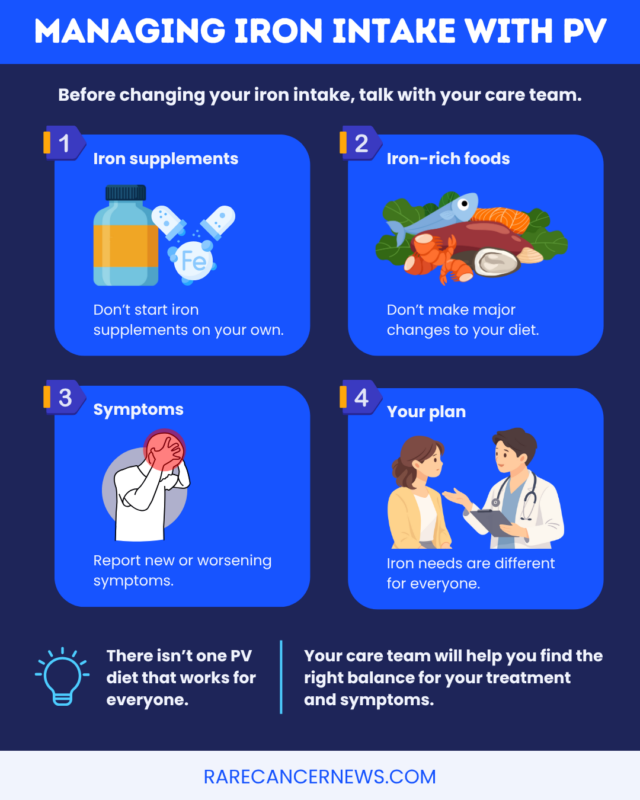
You may not need to avoid iron-rich foods because you have PV. Your individual iron needs can depend on your iron levels, symptoms, and treatment plan. Talk with your doctor or a registered dietitian before making major changes to your diet to limit or increase iron intake.
Working with your healthcare team
Managing PV iron levels can require a careful balance. Your care team may need to manage your hematocrit, or the percentage of red blood cells in your blood, while also monitoring for signs and symptoms of iron deficiency that may significantly affect your quality of life.
Blood tests can help your doctor monitor your blood cell counts and assess your iron status when needed. Ferritin, a protein that stores iron, is one measure that may help your doctor evaluate your body’s iron stores.
Talk with your doctor before taking iron supplements or changing your diet to include more iron-rich foods. Increasing your iron levels may encourage your body to produce more red blood cells and can affect how your PV is managed.
If you have symptoms of iron deficiency, tell your care team. They can evaluate your iron levels and help determine whether any changes to your treatment or iron intake may be appropriate.
Rare Cancer News is strictly a news and information website about the disease. It does not provide medical advice, diagnosis, or treatment. This content is not intended to be a substitute for professional medical advice, diagnosis, or treatment. Always seek the advice of your physician or other qualified health provider with any questions you may have regarding a medical condition. Never disregard professional medical advice or delay in seeking it because of something you have read on this website.