Polycythemia vera diet: Foods to eat and avoid
 Fact-checked by
 Polycythemia vera (PV) is a chronic, slow-growing blood cancer that can affect your red blood cells, white blood cells, and platelets (the cell fragments that help your blood clot). Because PV causes your body to produce too many blood cells, your blood can become abnormally thick, increasing your risk of blood clots.
Taking care of your cardiovascular health, including following a heart-healthy PV diet, can support your overall health and help manage certain risk factors that increase your likelihood of complications.
Heart-healthy foods to consider
Following a heart-healthy diet can benefit most people and may be especially important if you have PV. While there is no specific diet for PV, doctors may recommend the Mediterranean diet for its cardiovascular and anti-inflammatory benefits. This eating style emphasizes fruits and vegetables, legumes, whole grains, lean proteins, and olive oil, while limiting sugary and highly processed foods.
Some studies also suggest that the Mediterranean diet may support healthy platelet function, which plays a role in blood clotting.
Heart-healthy foods for PV that you may want to have in your diet include:
- fruits and vegetables
- whole-grain foods
- nuts
- legumes, such as beans
- fish
- moderate amounts of extra virgin olive oil
- coffee, which some studies suggest has anti-inflammatory and anti-tumor benefits
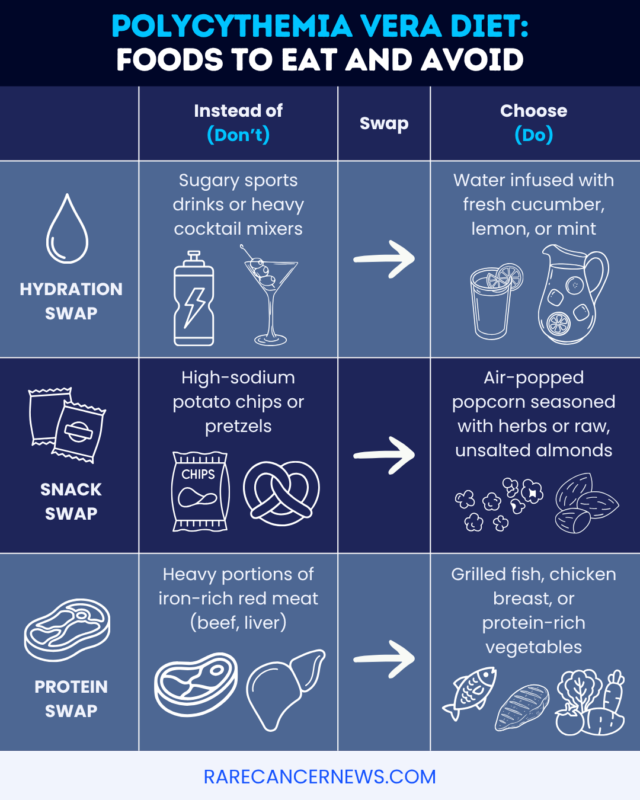
Hydration is another important part of managing your health with PV. Although there are no specific hydration guidelines for PV, doctors generally recommend staying well hydrated, especially during exercise and before or after phlebotomy, a procedure that removes blood from your body.
Staying well-hydrated may help you manage fluid loss from phlebotomy and prevent dehydration-related increases in hematocrit, the percentage of red blood cells in your blood. Aim for 6-8 glasses of water or other non-alcoholic, sugar-free drinks every day.
Foods and substances to limit or avoid
Living with PV may mean taking extra care with certain foods and substances. Some lifestyle choices can increase your risk of blood clots. Iron also supports red blood cell production, which may affect how your PV is managed.
Suggested substances and foods to avoid with PV include:
- iron supplements: Taking supplemental iron can encourage your body to produce more red blood cells, posing a potential concern when you have PV. If you experience significant symptoms of iron deficiency, talk with your doctor about how to safely manage your iron levels.
- foods high in iron: Red meat and other iron-rich foods can contain high amounts of iron. Current guidelines do not specifically recommend avoiding these foods if you have PV, but you may want to ask your doctor whether you need to adjust your diet based on your iron levels.
- highly processed foods: Fast food and packaged snacks may contribute to inflammation and other factors that negatively affect your health.
- foods that may contribute to cardiovascular risk: Foods high in saturated fat or sodium may raise your cholesterol or blood pressure.
- smoking or vaping: Tobacco and vaping products can increase your risk of a blood clot.
Creating a long-term nutritional plan
Following a PV nutrition plan may help support your overall health. Consider keeping a food journal to track your diet and hydration. If you have concerns about your nutrition, sharing a food log with your doctor may help you identify changes that could better meet your needs.
Some hospitals and clinics have registered dietitians who specialize in helping people with cancer or chronic diseases manage their nutritional needs. If you would like extra guidance on dietary recommendations for managing PV, consider asking your care team if a dietitian is available in your area.
Daily self-care and long-term outlook
Making thoughtful food and hydration choices plays a key part in managing your health with PV.
Simple steps you can take include:
- building meals around whole foods: Fruits, vegetables, whole grains, and other foods with anti-inflammatory and antioxidant properties may help support heart health and ease chronic inflammation.
- drinking fluids regularly: Staying hydrated can improve blood flow, and it becomes especially important when you exercise or have a phlebotomy appointment.
- being cautious with supplements: Talk with your doctor before taking iron or making other major changes to your diet.
- choosing habits you can maintain: A realistic eating plan that fits your needs is much easier to follow over the long term.
Chronic inflammation may contribute to PV and its symptoms. Diet does not replace your PV treatment or regular medical care, but healthy daily habits can help support your overall well-being.
Rare Cancer News is strictly a news and information website about the disease. It does not provide medical advice, diagnosis, or treatment. This content is not intended to be a substitute for professional medical advice, diagnosis, or treatment. Always seek the advice of your physician or other qualified health provider with any questions you may have regarding a medical condition. Never disregard professional medical advice or delay in seeking it because of something you have read on this website.