Mezigdomide for multiple myeloma
 Fact-checked by
 What is mezigdomide for multiple myeloma?
Mezigdomide is an experimental oral medication being tested as a treatment for multiple myeloma, a type of blood cancer.
In multiple myeloma, plasma cells, a type of immune cell, begin to grow out of control in the bone marrow, the spongy center of bones. These cancerous plasma cells, also called myeloma cells, often evade the immune system’s natural defenses.
Mezigdomide is part of an experimental class of targeted multiple myeloma therapies called cereblon E3 ligase modulatory drugs (CELMoDs). CELMoDs bind to a protein called cereblon, which works as part of a larger molecular complex to mark aberrant or unwanted proteins for recycling. By binding, the medications help cereblon efficiently tag proteins that are key for myeloma cell survival, ultimately encouraging cells to destroy these proteins.
This is expected to weaken myeloma cells and cause them to die off, and may also help the immune system better recognize and target the cancer.
CELMoDs like mezigdomide are related to approved immunomodulatory drugs for multiple myeloma, but are designed to bind to cereblon more strongly and thus have more potent effects.
Bristol Myers Squibb is developing mezigdomide and currently sponsoring several clinical trials to assess its safety and efficacy in multiple myeloma. Most ongoing studies are focusing on individuals who have experienced a return of the cancer (relapse) or proven nonresponsive (refractory) to prior treatments.
Therapy snapshot
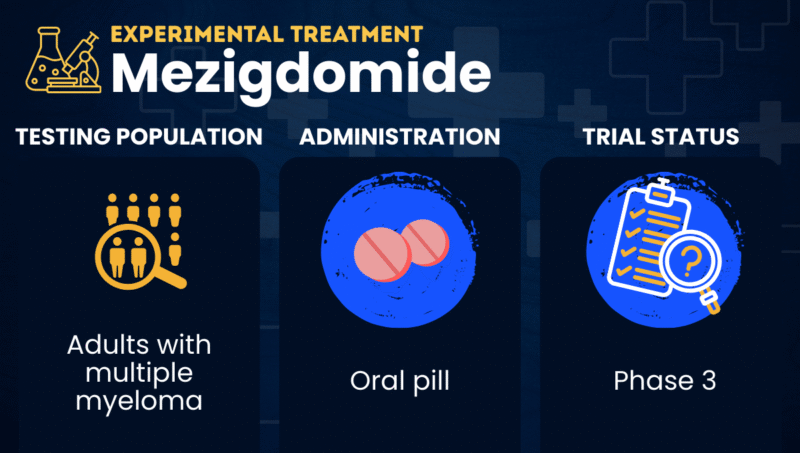
| Treatment name | Mezigdomide |
| Administration | Oral pill |
| Clinical testing | Currently in Phase 3 testing |
How will mezigdomide be administered in multiple myeloma?
Mezigdomide has been tested at various doses and treatment schedules. In the Phase 3 part of ongoing clinical trials, the medication is taken by mouth once per day at a dose of 1 mg. Depending on the exact combination regimen, it is taken for the first two weeks of each three-week treatment cycle or the first three weeks of each four-week cycle.
Mezigdomide in multiple myeloma clinical trials
The Phase 3 SUCCESSOR trials — SUCCESSOR-1 (NCT05519085) and SUCCESSOR-2 (NCT05552976) — are evaluating the safety and efficacy of mezigdomide when combined with dexamethasone and proteasome inhibitors in people with relapsed or refractory multiple myeloma (RRMM). In both trials, the primary outcome of interest is progression-free survival (PFS), or the time spent alive without disease progression.
- In SUCCESSOR-1, approximately 810 participants will receive Velcade (bortezomib) and dexamethasone, combined with either mezigdomide or the approved immunomodulatory agent Pomalyst (pomalidomide).
- In SUCCESSOR-2, about 525 participants were assigned to receive Kyprolis (carfilzomib) and dexamethasone, with or without added mezigdomide. Interim results showed that the mezigdomide-containing regimen led to statistically significant and clinically meaningful improvements in PFS compared with the other regimen.
The launch of the SUCCESSOR trials was supported by earlier Phase 1/2 studies:
- CC-92480-MM-002 (NCT03989414) tested various mezigdomide treatment regimens in people with RRMM or newly diagnosed myeloma. Data showed that among RRMM participants who received mezigdomide with dexamethasone and a proteasome inhibitor (Velcade or Kyprolis), three-quarters or more had at least a partial response to treatment, reflecting a reduction in disease activity.
- CC-92480-MM-001 study (NCT03374085) tested the safety and efficacy of mezigdomide when used with the corticosteroid dexamethasone among RRMM patients who had previously received at least three lines of treatment. Results showed that 41% of participants had at least a partial response to treatment.
BMS is also sponsoring other earlier-stage Phase 1/2 studies that are evaluating mezigdomide in combination with other therapies:
- CA057-003 (NCT05372354) is assessing the safety and efficacy of mezigdomide when combined with other experimental myeloma therapies. Preliminary results suggested signs of efficacy in RRMM.
- CA057-1040 trial (NCT06988488) is assessing the combination of mezigdomide and the approved antibody therapy Elrexfio (elranatamab) in RRMM participants.
Mezigdomide side effects
In early clinical trials, the most common side effects of mezigdomide and dexamethasone, taken with or without a proteasome inhibitor, included:
- low blood cell counts
- infections, including pneumonia
- fatigue or lack of energy
- diarrhea
Safety is also a key outcome for ongoing trials, which will continue to assess the side-effect profile of mezigdomide over longer periods of time.
Rare Cancer News is strictly a news and information website about the disease. It does not provide medical advice, diagnosis, or treatment. This content is not intended to be a substitute for professional medical advice, diagnosis, or treatment. Always seek the advice of your physician or other qualified health provider with any questions you may have regarding a medical condition. Never disregard professional medical advice or delay in seeking it because of something you have read on this website.