
Social media can be a scary place for myeloma patients
Influencers can give people the wrong idea about health and wellness
Written by |
In the spirit of Halloween, I’m offering up the scariest costume I’ve ever worn. It was for a work party a couple of years ago. I even had an introductory speech for my character:
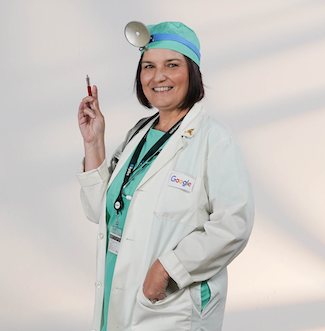
Gina Diamante models her Halloween costume, Dr. Google. (Courtesy of Gina Diamante)
“I’m Dr. Google, a World Wide Web-renowned nonmedical genius. You’ve got questions about that headache, that back pain, or that rash in a place we will not discuss publicly? I’ve got answers — a Googleplex of answers! They may not be the right ones, but hey, I’m not a real doctor! I just play one on the internet.”
In online support groups, I often warn people about how searches can lead to scary — and scarily inaccurate — conclusions. I’m sure I’m not the only one who has diagnosed myself with something awful after searching for whatever was ailing me at the moment.
Who needs slasher films when you’ve got the internet to terrify you?

Under the influence(rs)
If not for trademark issues, I could turn Dr. Google into a social media influencer for myeloma. Influencers do seem to be all the rage. Last spring, the Pew Research Center said some 40% of U.S. adults reported getting health and wellness information from social media influencers or podcasts. A more recent Pew study says most of these influencers post about looking and feeling better, with 38% featuring some kind of pitch for a brand, product, or service.
Last year’s Pew study found that 10% of respondents trusted most or all of the information they got from influencers, while 65% trusted only some of it. I find that encouraging when I consider that many social media posts are brief. One of my newsroom colleagues describes them as “snackable.” But just like cheese and crackers cannot replace a full meal, a short post cannot tell a whole story. A researcher at the University of California San Diego found that shortcuts to make science news more clickable can leave people with the wrong idea, especially if they only read the headline and don’t click through to a linked article.
The social accounts I trust
To me the best myeloma influencers don’t make their living as influencers. They’ve built their credibility as doctors, researchers, and patients. The people I follow include Kathy Giusti, founder of the Multiple Myeloma Research Foundation; Joseph Mikhael, MD, medical adviser to the International Myeloma Foundation; and Cindy Chmielewski, curriculum director for the HealthTree Foundation. I’ve always found their information clear, concise, and very valuable in my myeloma journey.
Now, if only one of them could determine that Halloween candy is the cure for myeloma!
Note: Rare Cancer News is strictly a news and information website about the disease. It does not provide medical advice, diagnosis, or treatment. This content is not intended to be a substitute for professional medical advice, diagnosis, or treatment. Always seek the advice of your physician or other qualified health provider with any questions you may have regarding a medical condition. Never disregard professional medical advice or delay in seeking it because of something you have read on this website. The opinions expressed in this column are not those of Rare Cancer News or its parent company, Bionews, and are intended to spark discussion about issues pertaining to rare cancer.

Leave a comment
Fill in the required fields to post. Your email address will not be published.